.png)
Introduction:
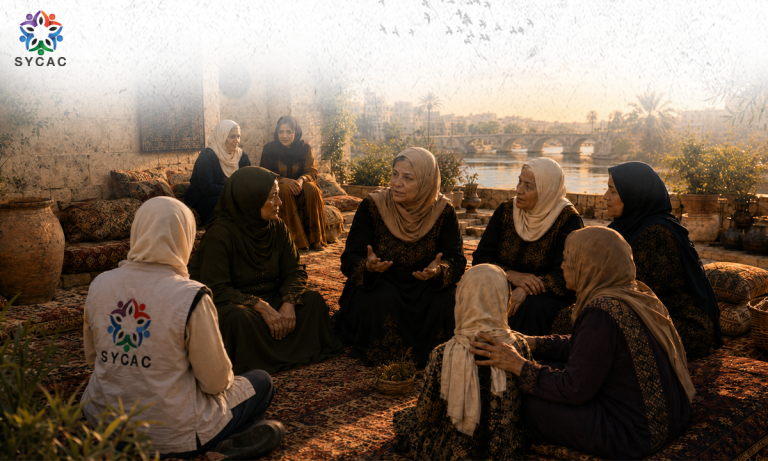
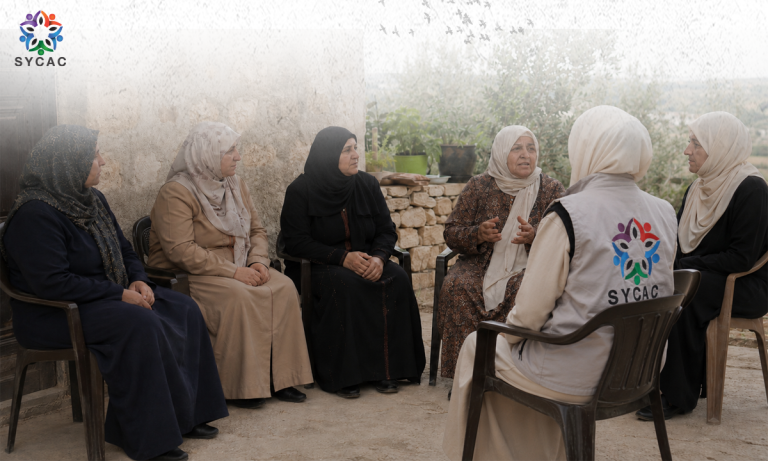
This document presents a summary report of discussions during the workshop that was organized by SYCAC and held on August 10, 2023. The workshop focused on the implications of the February 6 earthquake on the communities of northwest Syria, as well as the social issues both emerged as a direct result of or compounded by the earthquake.
A total of 26 local, national, and international organizations actively operating in northwestern Syria participated, physically and online, in discussions aimed at addressing critical concerns observed during their emergency and post-emergency response efforts. The objective was to identify and propose effective intervention strategies based on early warning indicators related to societal challenges jeopardizing stability and hindering peacebuilding endeavors in this region.
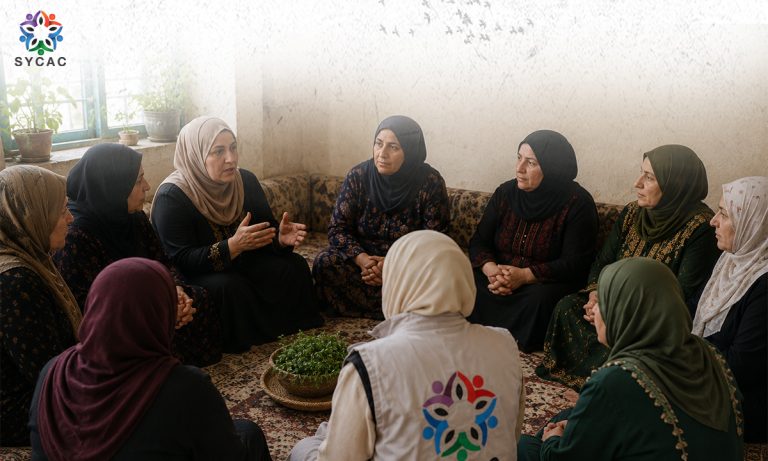
The workshop was based on a Background Paper which was the result of a series of focused discussion sessions and dialogues conducted by the Syrian Peacebuilding Club with the earthquake-affected communities. These interactions sought to evaluate the diverse needs, challenges, and difficulties emerging in these communities as a consequence of the earthquake. These issues have the potential to destabilize the affected areas, generate conflicts, and exacerbate vulnerabilities in their social fabric. Therefore, it became imperative to closely monitor and actively contribute to addressing these concerns, particularly the social, economic, political, and psychological factors that significantly impede the implementation of sustainable solutions for social stability.
Main Discussion Topics:
The discussions during the workshop were organized around four main challenges that have a significant impact on the stability of societies in northwestern Syria and pose obstacles to grassroots peace-building endeavors, as per the perspectives of workshop participants. These issues encompassed economic recovery and livelihoods, mental health and psycho-social well-being, legal and property matters, and the vital facet of community cohesion. In-depth analyses were conducted to delve into these concerns, exploring potential mechanisms and interventions for their resolution. Furthermore, the discussions also featured the integration of a gender perspective and emphasized the influential role of media in addressing these challenges.
Social cohesion issues:
- Disputes over resources: The reallocation of assistance and resources originally earmarked for pre-earthquake beneficiaries towards those affected by the earthquake in the impacted areas has precipitated conflicts between the vulnerable host community and the newly displaced individuals, exacerbating tensions among earthquake-affected populations.
- New displacement cycles: Some 53.000 families were displaced in NW Syria as a result of the earthquake, in addition to around 42.000 arrivals from Turkey. Most people have lost their belongings, including crucial documents and household items. Displaced families have found refuge in emergency reception and collective centers and IDP camps. Some displaced families are taking shelter with friends or relatives. Overcrowding, lack of infrastructure and facilities, and other challenges significantly impact the social stability in the region.
- Lack of dialogue and interaction: Societal understanding of core values remains inadequate, resulting in misinterpretations, the perpetuation of stereotypes and biases, and a dearth of mutual trust and positive interactions among diverse societal components.
Participants suggested the following intervention mechanisms:
- Enhancing community awareness, participation, and empowerment, encompassing individuals of all genders and age groups.
- Embracing dialogue as a key tool and approach, especially in interactions involving individuals from diverse backgrounds, such as returnees from Turkey, former displaced persons, and the local host community, fosters convergence of perspectives among Syrians. This approach lays the groundwork for a comprehensive peace process, particularly in light of the region's demonstrated unity transcending geographical boundaries during the earthquake.
- Mainstreaming gender considerations into all intervention facets aimed at conflict resolution and prevention, as well as the establishment of sustainable peace.
- Designing interventions that encompass measures to safeguard the rights of all individuals, irrespective of their demographic characteristics. This includes ensuring nondiscrimination in accessing essential services, healthcare, and employment opportunities. Additionally, mechanisms are established to address cases of discrimination and promote equal treatment for all members of society.
- Improving the role of the in a way that it prioritizes accurate reporting, human interest stories to highlight the real impact on communities, provides a platform for affected individuals to share their experiences and needs, and work in collaboration with humanitarian organizations to ensure that accurate and timely information is accessible to both responders and affected populations.
- Taking stock of the solidarity emerged in the aftermath of the earthquake across different regions in Syria and strengthening coordination and networking between community initiatives that responded to the needs of those affected by the earthquake across the Syrian geography and that went beyond all divisions and differences.
- Ensuring fair and equitable distribution of support and resources to both pre-existing needy individuals and those affected by the earthquake, and ensuring that transparent mechanisms are in place to prevent conflicts arising from perceived unfairness in the allocation of resources.
Economic recovery and livelihoods issues:
The challenges identified under this theme were the following:
- Many vulnerable individuals and families in the affected areas lost their sources of livelihood, especially those dependent on agriculture and small businesses. The earthquake caused damage to farms, livestock, and infrastructure, disrupting agricultural activities.
- The destruction of businesses and infrastructure led to a decrease in job opportunities, particularly in the construction and small-scale manufacturing sectors, affecting daily wage laborers and informal workers.- The current state of economic, political, and social instability, which also receded after the earthquake, reduces investments and trade in the region.
- The earthquake disrupted local economies by damaging markets, transportation routes, and industrial facilities, impacting both production and trade. This, in turn, further deteriorated the economic stability of the region.
- Years of protracted conflict and political turmoil in Syria have damaged the national economy. Currency depreciation and inflation have weakened purchasing power, leaving households unable to cover their most basic needs. Following the earthquake, their ability to generate an income worsened. A lack of economic resources was reported as the main barrier to meeting basic needs, including food.
- Loss of the breadwinner: Many families have lost their main breadwinner, which makes them face burdens and responsibilities without the necessary resources, especially for women who often bear the burden of the consequences, as they are likely to be more vulnerable to exploitation and the exploiters take advantage of their vulnerable situation.
- Exploitation and high prices: The problem of exploitation and high rent prices has worsened in the region, resulting in conflicts, and exacerbating existing societal tensions, eroding trust and deepening divisions within communities already grappling with the repercussions of the disaster.
- Increased Dependence on Humanitarian Aid: Communities have become increasingly dependent on humanitarian assistance for basic needs, and this is expected to have long-term consequences for the self-sufficiency and economic development of the region.
As for the mechanisms of interventions, the participants suggested the following:
- Supporting vulnerable and most affected communities and groups through cash for work projects, short and long term employment opportunities by providing necessary skills in line with the market needs.
- Moving from immediate relief to long-term development projects that promote self-sufficiency.
- Supporting local entrepreneurship and economic initiatives, especially for marginalized groups, to reduce dependence on aid.
- Supporting industries affected by conflicts and disasters by supporting them financially and technically to retain and create job opportunities.
- Investing in diversifying local economies to reduce dependence on one industry.
- Support cash distribution programs that prioritize women's safety and independence.
- Providing vocational training programs, entrepreneurship initiatives and small enterprise support to provide economic support and enhance the flexibility of money flows, with special attention to empowering women, who may face additional vulnerabilities.
Mental health issues
The challenges identified under this theme were the following:
- The earthquakes caused widespread psychological distress among individuals, with a significant increase in psychological disturbances. Cases of maladjustment to the post-earthquake situation have emerged, particularly among children. This has led to behavioral problems such as bedwetting, increased aggression, attachment to parents, nightmares, and social isolation.
- Suicidal ideation is on the rise due to lasting hardship. Children and young people are perceived as particularly vulnerable to suicidal ideation due to poverty, lack of basic needs and uncertain future ahead.
- Women and girls’ mental health severely impacted by the consequences of the earthquake such as limited mobility linked to lack of safety, in addition to heightened exposure to various forms of Sexual and Gender-based Violence (SGBV) such as early and forced marriage. The intersection of gender, displacement status, and marital status aggravates this population group’s needs and exposure to protection threats. Overcrowding is reported as the main issue in relation to the increased risks of GBV in temporary shelters.
- PWDs have been identified as one of the most at-risk groups following the earthquakes and among those facing the most significant challenges. There has been a significant increase in the number of PWDs since the disaster, and there is a significant need for dedicated services, including mental health support.
- High costs of treatment and psychological services.
As for the intervention mechanism, the following suggestions were presented:
- Secure long-term treatment programs using the therapeutic modalities "CBT - EMDR - ACT" a Mental health guide for all, where there is no psychiatrist.
- Raising awareness of mental health issues through training, workshops, and meetings.
- Providing teletherapy options for individuals who may have limited access to in-person services.
- Conduct studies to identify the root causes of mental health challenges and design interventions accordingly.
- Create support projects for women to form peer support groups.
- Financial grants to support the provision of free psychological support sessions.
- Sharing inspiring experiences and lessons that happened during this experience.
- The availability of supporters who provide services need permanent psychological support.
- Formation of a guide for ethical controls for the provision of mental health services, to be published through the media.
Issues related to civil documentation and HLP rights:
The earthquake survivors lost their personal documents, documents of ownership and real estate, what created many disputes over land and property rights, especially since Syrians are still struggling to recover their property or prove its ownership. This issue may produce new conflicts between the residents and between the people and the ruling authorities in the region, which further complicates the recovery process for the communities.
The chaos that followed the earthquake created opportunities for the controlling parties to engage in land grabs and exploitation of valuable property under the pretext of establishing camps with vast lands as public property for the authority. These illegal practices further complicated the situation and undermined the rights of the rightful property owners.
Proposed mechanisms and interventions:
- Creating mechanisms to document property transactions in northwest Syria.
- Community awareness of citizens of the terms and concepts of property protection.
- Enabling active institutions in the field of property and real estate to play their main role and assume their responsibilities.
- Forming specialized committees of technicians, experts, and jurists to document violations, limit problems and find solutions.
- Developing mechanisms to verify property documents and have them approved by official authorities.
- Providing a citizen service center that enables the person to obtain his documents easily without any complications.
- Creating specialized technical committees of community leaders, jurists, and technicians whose mission is to document property violations, limit problems related to rights and property, and propose solutions to them, in addition to spreading civil awareness of property rights and reviewing the current local laws of property that are adopted in northwestern Syria and addressing loopholes exist to ensure a fair and transparent process that includes the community and avoids further conflict.
Other issues raised:
Among the most important additional issues that were raised during the discussions, which the participants elaborated on, are:
Issues related to women
Discussions pertaining to women's concerns highlighted the stark disparity in women's access to accurate information and assistance, largely attributed to a technological knowledge gap and the proliferation of misinformation. This, in turn, exacerbated the vulnerability of certain groups during the earthquake. Hence, it is imperative to incorporate a gender perspective into the operations of humanitarian organizations, as well as into the media's portrayal of women. Rather than portraying women solely as victims deserving of sympathy, it is crucial to acknowledge and celebrate the pivotal roles that women played on the front lines of earthquake response. Women actively provided aid and assumed leadership positions in community initiatives within the earthquake-affected areas, demonstrating their resilience and agency in times of crisis.
Substance abuse
In the wake of the disaster and after twelve years of war, the use of substances as a negative coping mechanism has increased among vulnerable populations in Syria, particularly among the youth. Anecdotal evidence from informants raised concerns about drug abuse. There is an increased need to create awareness campaigns.
Loss of confidence in the media
confidence in the media eroded as certain institutions, as described by participants, were seen to exploit the disaster for their own gain. A notable example occurred in Jenderes when, on the third day following the disaster, rumors about the earthquake proliferated along with the dissemination of unreliable information. Meanwhile, the media was expected to focus on publicizing the urgent need for heavy equipment. The excessive presence of media personnel on the ground further impeded the efforts of the working crews who were actively engaged in response and relief operations.
Lack of coordination and disaster preparedness
Inadequate coordination and disaster preparedness among humanitarian organizations was also identified as a notable issue. This deficiency hindered the timely and effective delivery of assistance and relief efforts. The absence of a well-coordinated response plan meant that resources were not optimally allocated, leading to gaps in aid distribution. Furthermore, the lack of pre-established disaster preparedness measures left organizations scrambling to mobilize resources and personnel, delaying critical assistance to those in need. Most of the problems are repeated in terms of:
- Fair and equitable aid distribution.
- Coordination among organizations in terms of being aware with their responsibilities and roles according to their specializations.
- Disaster preparedness
- Caring for first responders
Environmental Issues
Participants did not overlook the importance of the impact of disasters on the environment, taking environmental safety into account while providing response, creating an environmentally friendly organizational work environment, and making it a priority for organizations.