.png)
- Introduction:
From a catastrophe to reviving the solidarity and cohesion of the Syrian spirit. This is how the disaster of the earthquake that hit several areas of Syria in February 2023, leaving thousands of demolished and cracked homes, deaths and injured created solidarity and hope in the spirits of Syrian. Therefore it was important to highlight the social initiatives that were formed a lifeline for a large number of those affected by the earthquake, as it contributed to supporting affected people in many ways with in-kind and moral assistance without geography forming a barrier between the Syrian cities, the north, south, east and west participated in launching initiatives for the afflicted areas and for the survivors, those who suddenly found themselves without shelter or without the simplest means of living, which was a step towards building peace in the country and bringing hearts and viewpoints closer between the different regions.
The fact that this experience, with all its cruelty to those afflicted, demonstrated the importance of social solidarity to rebuild ways of human communication between the components of Syrian society, from the north to the south. It also showed the eligibility of the Syrians and their capabilities to deal with such disasters and crises in the event of their occurrence. This is what motivates us to document these initiatives and seek to highlight them in the media with all their details and results, in a manner befitting the Syrian spirit that the disaster contributed to show.
- The Survey
2.1The Methodology:
A. The goals of the survey:
- Searching and discovering community and civil initiatives, and analyzing their role in supporting those afflicted, by knowing and studying the type of solidarity and how it was presented.
- Evaluating the role and impact of these initiatives in helping earthquake-affected people in securing emergency and
- essential needs, and continue their lives, in addition to psychological and moral support.
- Shedding light on the cooperation and solidarity witnessed by the Syrian society after the earthquake occurred, between cities in different geographical regions under unusual circumstances.
- Identifying the motives that made individuals and groups from different cities take solidarity initiatives for the benefit of the earthquake victims.
- Determining success factors of these initiatives, within different and varied models and experiences, and search for ways to develop and improve them.
- Enhancing the spirit of solidarity shown by the disaster, by highlighting the humanitarian impact of the initiatives on those affected by the earthquake, to encourage the repetition of social cooperation in the event of similar disasters in the future.
B. Survey Tools:
In order to identify the activities that provided response and solidarity with those affected by the earthquake and to classify them into categories according to the regions from which they were launched, given that they are the source of the required information; The following was done:
1- Conducting a survey study by designing special forms (questionnaires) to document solidarity initiatives with those affected by the earthquake, which included the following parameters:
- Evidence of the initiative: photos - videos - links where the initiative was published.
- Known to people.
- presence phone number and name of the person who established this initiative.
2- Listing local initiatives and conducting interviews with event founders or participants to obtain information by answering questionnaire questions.
3- Tracking unknown initiatives, by applying the snowball sample by asking the initiative owners about the existence of other initiatives they know, and providing us with their contact information, so that they can be communicated with and documented as well.
4- Doing a focused discussion session with women and men leaders of the local community who are interested in this matter, to learn about the societal impact left by these campaigns and initiatives in society.
5- Analyze and classify the information contained in the questionnaires and extract its results.
6- Determine the number and type of initiatives and their impact on the people affected by the earthquake.
7- Identify outstanding initiatives that made a significant impact and provided the best response.
C. The Implementation
In the first week of June, survey forms and focused discussion sessions were designed, a data collection plan was developed, and discussion sessions were implemented aiming to reach the research objectives. In addition, a meeting was held with the coordinators of the Syrian Peace Building Club to explain the questions of the questionnaires, the research method and its objective, and to train them how to carry out the survey. Then Club team held a meeting with the team to explain the form and clarify the work mechanism.
On the second week of the month, the Club team coordinated with the owners of well-known initiatives, then organized appointments to conduct the documentation session, and began to collect data. This process lasted for ten days, in which 174 forms were documented that were sent from As-Suwayda, Damascus, Aleppo, Idlib and Raqqa. On parallel and during the same period, the club team implemented 4 FGD sessions in of Aleppo, Idlib, Raqqa and As-Suwayda, with participation of 40 people of women and men communities’ leaders.
In addition, the Club team began to choose the forms study and accept the ones that meet the measures in which 162 initiatives’ forms were approved, and 14 forms were cancelled, due to the absence of supporting documents for the form, or form duplications, then the acceptance stage coincided with the questionnaire analysis, and finally, an analysis of the focused discussion sessions during the third week of the month.
D. Survey Outputs:
The final outputs of the survey, which included 162 initiatives in the Syrian cities, showed the following results:
- The collective initiatives are 131 and the individual initiatives are 31.
- 60% of the initiatives’ funders are male, and their number is 641.
- 40% of the initiatives’ funders are female and their number is 415.
- 62% of the volunteers in the initiatives are male and their number is 3816.
- 38% of the volunteers in the initiatives are female and their number is 2315
3. The Initiatives
3.1 The initiatives’ Goals:
- The objectives of 62% of the initiatives were to help the afflicted and affected by the earthquake in Syria to overcome the psychological effects caused by the disaster.
- The goal of 27% of the initiatives was to deliver aid directly to those people in the affected areas.
- 6% of the initiatives set their goal to help people with disabilities, crush cases, integrate them into society, follow up on people injured in the earthquake, treat them, and provide them with medical assistance.
- The objectives of 5 initiatives focused on creating a link between the affected people coming to As-Suwayda, the countryside of Damascus, and Raqqa, and the authorities concerned with helping them and those affected by the earthquake who were displaced from Aleppo, Hama, Homs, and the Syrian coast.
- The aim of two initiatives was to involve and empower young people in solving community problems and showcasing the authentic Syrian customs
3.2 Initiatives Motivations:
- The motive for 94% of the initiatives was humanity, a sense of responsibility and Syrian belonging after the great disaster that befell the people, and to give a message of peace, love and sympathy to those affected by the earthquake from all Syrian regions.
- Several volunteers rushed to create six initiatives to deal with the state of fear and the psychological impacts that the affected suffered from, especially children and women.
- Sympathy for people with special needs, women and girls, was one of the motives for four initiatives, because they are among the vulnerable and marginalized groups in society.
- One initiative’s motive was to contribute to raising the level of coordination between the agencies operating on the ground.
- One initiative was motivated by an influential post by a student on Facebook about his deteriorating academic situation due to the earthquake, which prompted a group of teachers to help students with certificates.
3.3 Target groups:
- 78% of the initiatives targeted all those affected irrespective to which categories they belong.
- 13% of the initiatives targeted women and children.
- Five initiatives targeted people coming from the affected cities to As-Suwayda, Damascus and Raqqa.
- Four initiatives focused on affected patients, bruises, fractures and wounds.
- Four of the initiatives focused on the old people with special needs, and those trapped under rubble
- Two initiatives targeted university, preparatory and secondary school students were targeted in two initiatives, which were called for by the urgent need to follow them up and help them pursue their studies during the earthquake period.
3.4 Resources of provided response:
- 97% of the provided resources to the response in initiatives were of donations of foodstuffs, tents, financial donations, first aid supplies, medicines, and medical supplies, in addition to furniture such a blankets and sponges, as well as winter clothes, dignity baskets, heating materials, drinking water, toys and gifts.
- The resources available to 4 initiatives were tools for digging and removing rubbles, heavy machinery, fuel materials, marble stones, tombstones, and means of transportation.
- The resources for four initiatives were statistics and online documentation.
- The resources for two initiatives were books and educational materials.
3.5 provided Services:
- 81% of the initiatives provided various financial and in-kind assistance to those affected, according to need, food, clothing, medicine, medical supplies, infant formula, heating materials, tents, shelters, or accommodations for those affected have been secured.
- 9% of the initiatives provided milk, diapers, games and specialized sessions for people with disabilities according to the needs of each case, psychosocial support and awareness of psychological wellness during crises, entertainment activities for children and girls, gifts and stationery.
- 5.5% of the initiatives participated in extracting the victims from under the rubble, removing the backfill, transferring the injured to the hospital, and following them up in hospitals and shelters. The initiatives provided medicines and medical supplies.
- Four initiatives provided statistics, data, photographic materials, testimonies, assessment of needs, creation database including the names of the missing, survivors, and injured, and their whereabouts, and inspection of damaged homes and identification of dangers.
- Three initiatives also contributed to securing shelter for university students who are unable to reach their homes in remote areas, supporting students of preparatory and secondary degrees in the affected governorates, and providing them with financial donations.
- An initiative set up mourning houses for all the earthquake victims and wrote banners expressing solidarity with those affected and their great affliction.
3.6 Challenges:
- The great need in the affected areas, which is difficult to be fully covered by initiatives due to lack of resources, constituted the most important challenge for 35% of the initiatives.
- 9% of the initiatives faced big challenge due to the huge destruction and the large number of people trapped under the rubble, the difficulty of accessing the lists of the missing, the difficulty of securing basic needs in the first days of the earthquake and securing the tents. In addition to the poor response of organizations, the contradictory decisions of the local authorities and the lack of a central decision in the affected areas.
- 9% said that the difficulty of accessing areas outside the control of the government forces and the lack of cooperation of some government agencies in delivering aid except through them was the main obstacle in front of them.
- 9% talked about a challenge related to poor coordination with other initiatives, besides to the lack of fuel and transportation and the difficulty of moving between the affected areas, and the lack of mechanisms dedicated to demolishing tall buildings.
- 8% considered the very cold weather and snow that coincided with the earthquake a challenge.
- Four initiatives expressed that the attempt of some people who were not affected to obtain aid posed a challenge for them as well.
- During the establishment of student initiatives, teachers faced difficulty in obtaining and distributing books for (middle and high school).
- The Focus Groups Discussion
4.1 The results of the focused discussion sessions:
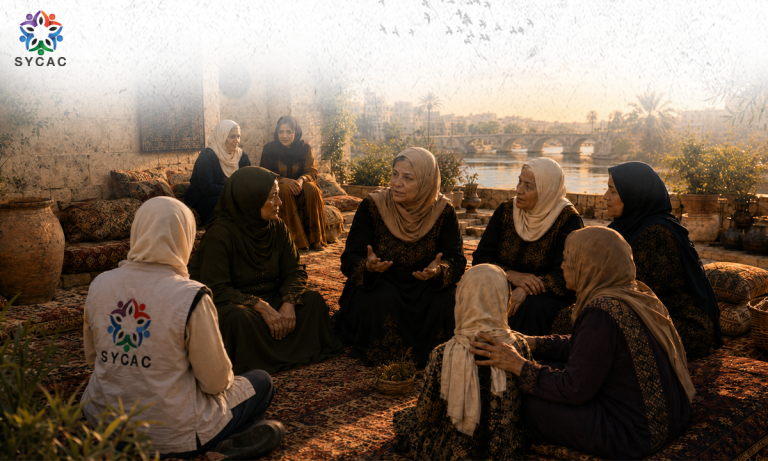
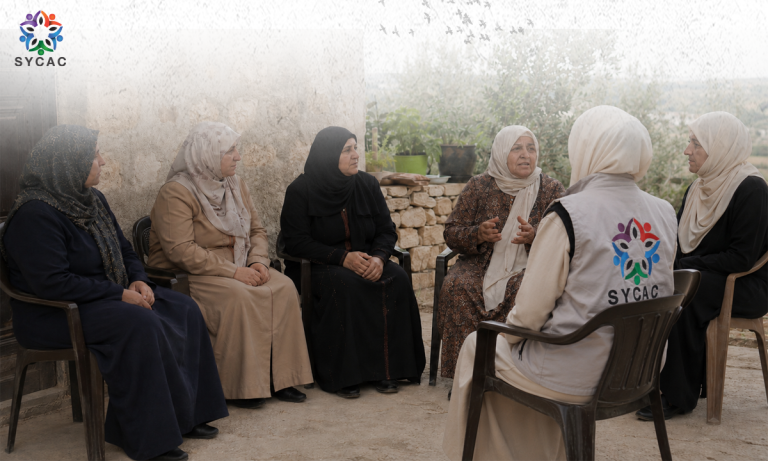
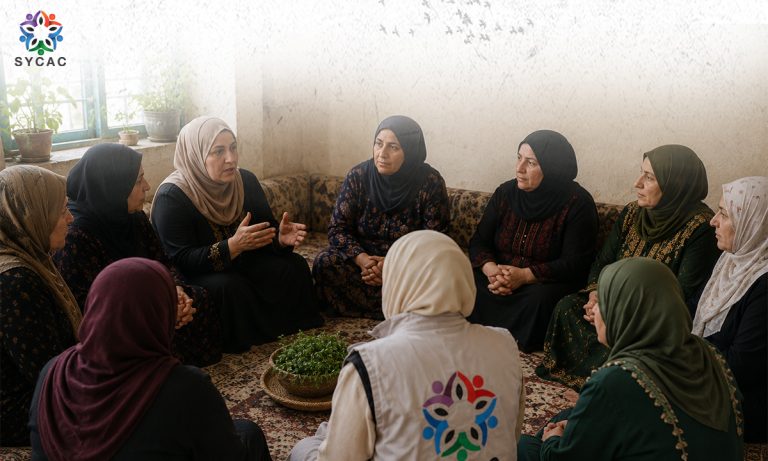
The Syrian Peace Building Club held focused discussion sessions with local community leaders across the Syrian geography, in Al-Suwayda, Damascus,
Idlib, and Raqqa, to know more about the societal impacts of those campaigns and initiatives on society.
Discussions can be concluded as the following:
- The community leaders considered that the voluntary initiatives contributed to strengthening the spirit of solidarity and cooperation among the members of the affected community through the concerted efforts and the readiness of the people to donate whatever they can, as well as the establishment of civil initiatives in a high spirit of cooperation, which contributed to removing the barriers set by the military and political divisions. It also confirmed the unity of the Syrian people, who do not accept the division, where they explained that all segments of Syrian society from all governorates joined forces to support the affected areas, which increased the cohesion between all regions.
- Local community leaders confirmed that the initiatives provided urgent assistance to the needy and affected, through the rapid and effective response of volunteer teams, individual and collective initiatives, as well as preparing different teams according to the condition of the damage within the affected areas, and preparing quick shipments of foodstuffs, medicines, infant formula, clothes and blankets, and sending them to those affected from other governorates.
- Community leaders believed that the initiatives were able to enhance awareness and education about the earthquake and public safety through publishing educational information on the correct behavior during disasters and to warn people not being drawn into false information and rumors about upcoming earthquakes. The initiatives also participated to raising awareness by holding educational sessions and distributing brochures to those inside the tents, beside to the psychological support teams that set up activities for children, noting that the greatest focus was on securing basic needs and psychological support.
- Regarding to evolving afflicted in the initiatives’ implementation, the community leaders affirmed that the process of communicating with individuals, teams, activists, and media professionals in the affected areas facilitated the implementation wither in relief work, securing students, or facilitating people's
access to safe places. Affected individuals also helped in assessing needs and distributing donations and played an important media role in highlighting the critical humanitarian situation in northwestern Syria, this led to raising the voice of the Syrians and calling for international appeals for urgent and rapid intervention to help and provide them with a supporting hand.
- The community leaders talked about events, activities and meetings aimed at enhancing communication and social balance between those affected and the community, stressing that several meetings were organized, especially with families who were displaced from the areas affected by the earthquake, in addition to a delegation going from Raqqa and entering the countryside of Aleppo to meet the people who were responsible for distributing aid shipments and delivering them by hand, and setting up a mourning stand in As-Suwayda governorate for all those who died in the earthquake, some volunteer teams from different governorates carried out psychological support activities for children in shelters, in order to alleviate the psychological trauma that befell them.
- Regarding encouraging volunteers and the local community to participate in initiatives and provide support, community leaders said that there was no need to encourage participation, as volunteering to help was mostly self-fulfilling, after the scale of the disaster became apparent, the media coverage contributed to mobilizing the community to aid.
- The community leaders indicated that the initiatives greatly affected the general spirit among the society individuals, as the emergency community response was the only lifeline, because the northwestern regions of Syria already suffered from a lack of services and witnessed the absence of a government or an authority with clear features. Therefore, the basic support for those affected by social initiatives created optimism and gave reassurance among them.
The initiatives also created a new spirit after the arrival of aid and support from the far south to the far north, which contributed to changing the stereotype that several parties contributed to forming and strengthening it among the governorates to increase the rift.
- The local community leaders pointed out that the initiatives contributed to the emergence of strong new alliances between the participants in the initiatives over the regions. Communication between the initiatives implemented in southern Syria and volunteer teams, civil activists, and the media in the affected areas. Communication also between the initiatives implemented in northeastern Syria and the affected people through collecting several initiatives in one initiative, which included Deir Ezzor, Al-Raqqa and Al-Hasakah, in which delivered huge convoys of aid to the northwest of Syria, and coordination rooms on WhatsApp between several cities and regions to organize the work and collect donations and deliver them to the affected people.
- The local leaders announced the inability or obstruction of the arrival of existing initiatives from remote areas to the affected areas due to the politicization of aid, the political and security situation in each region separately, and the presence of border crossings that limit and impede the movement of relief convoys, which leads to delay or non-arrival.
- Conclusion
This survey dealt with community initiatives that supported those affected by the Syrian earthquake, which is considered one of the strongest earthquakes the region has witnessed in modern history. Where he reviewed the most important services and activities carried out by these initiatives, and the challenges and difficulties they faced under difficult humanitarian and security conditions, it also touched on the positive impact of these initiatives in alleviating the suffering of those affected and restoring hope and life to the affected areas, which witnessed a major human tragedy, as well as the great impact they had on reuniting the Syrians despite all the circumstances and geographical divisions that were imposed on them, the survey concluded that these initiatives represent an important model of human solidarity, and deserve all the appreciation and support of the international and local community. We hope that this will contribute to raising awareness of the importance of the role of civil society in dealing with natural disasters, and to encourage and support more effective humanitarian and creative initiatives in this field, which would contribute to building peace and solidarity between the sons and daughters of the Syrian society and nation.
From the destruction, hope was born, and the Syrian spirit emerged in every region and house, to rebuild the Syrian scene again after the earthquake, with features befitting our country, the cradle of civilizations.
#The_Syrian_Spirit_Rebuilds_It