“It is interesting that SYCAC is one of the organizations that realized the importance of linking early recovery to peacebuilding, and this is what we have been calling for years, but it has not received a response.”
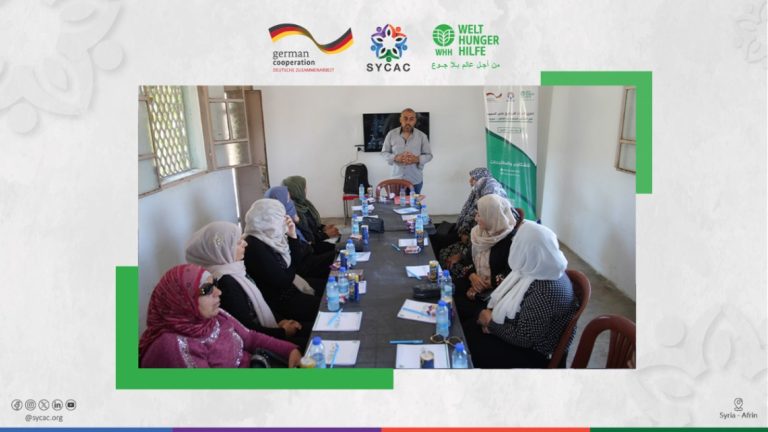
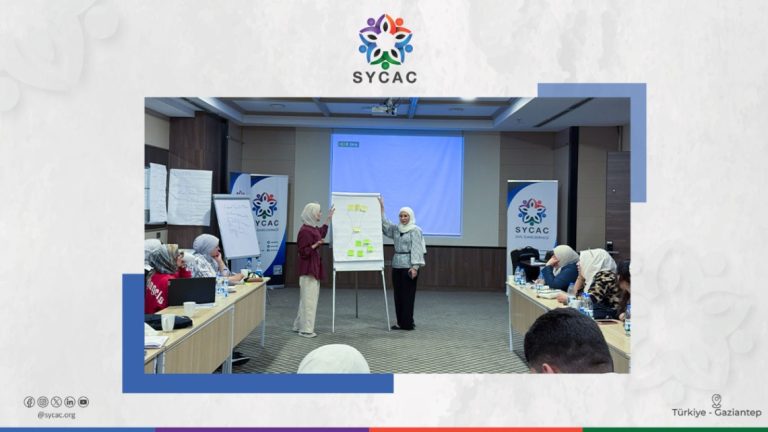
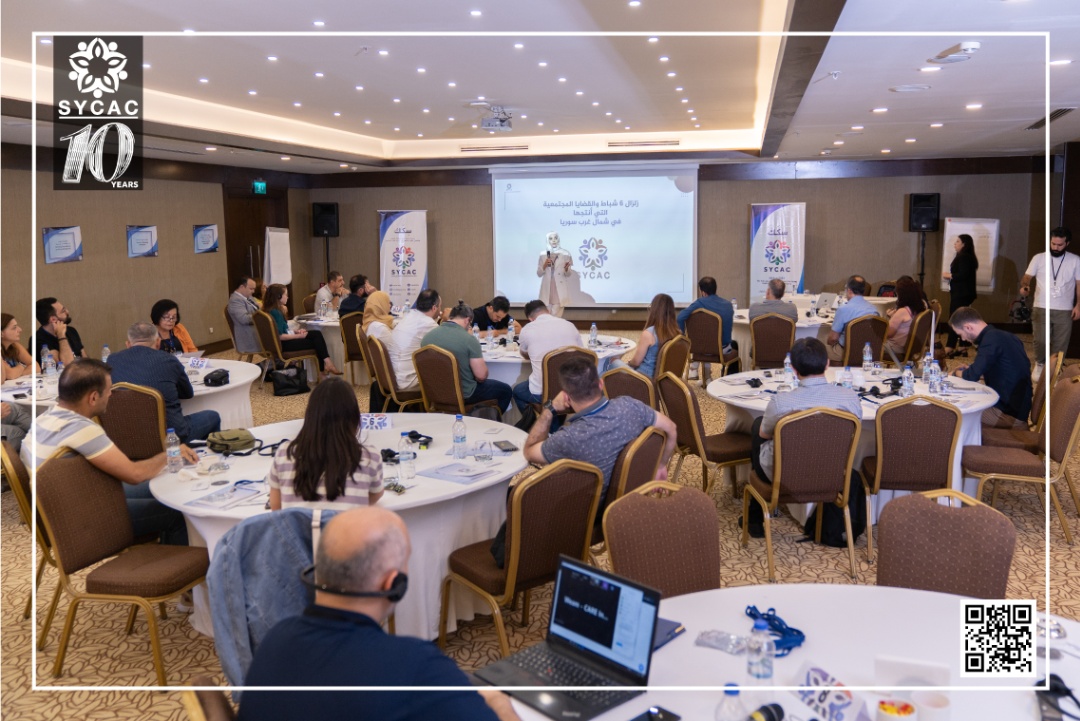
This quote was said by one of the attendees at the workshop organized by the SYCAC Organization on August 10, 2023, in the city of Gaziantep-Turkey, in participation of 26 Syrian and international organizations of which provided a response during the earthquake period in northwestern Syria. The goal of the workshop was to discuss the societal issues that arose after the earthquake, which could affect the stability of societies, based on a working paper prepared by the “Syrian Peacebuilding Club” on these issues.
The Syrian Peace Building Club is a platform established by the SYCAC Organization in 2022 aiming to rebuild bridges of trust and open channels of dialogue between the components of Syrian societies, and to reformulate the Syrian social contract and build a sustainable peace that guarantees social justice among the various components of the Syrian fabric. The club includes Syrian young men and women from different control areas of Syria to work on initiatives that contribute to social stability and harmony.
In the aftermath earthquake of February 6, the club’s members had many initiatives and campaigns, including the “#Syrian_Spirit_Rebuilds_it” campaign, which highlighted Syrian -Syrian solidarity during the earthquake. The club also monitored many issues that could be an early warning of future societal conflicts, through a series of community dialogues and focused group discussions with community leaders of men and women. These dialogues culminated in analytical papers and recommendations addressing and responding to them.
The February 6 earthquake in northwest Syria had a profound impact on social resilience and community stability, as it exacerbated the already fragile living conditions in the region. The earthquake, with its destruction of infrastructure and displacement of families, strained local resources, disrupted social networks, and increased vulnerability among residents. It highlighted the need for resilient community structures and support systems to cope with such disasters, emphasizing the importance of disaster preparedness, post-disaster recovery efforts, and international aid to help restore stability and foster community resilience in this conflict-affected area. Therefore, it was important to monitor those issues and discuss possible and available mechanisms for interventions and addressing them, as well as working to find sustainable solutions that enhance social stability at the economic, political, and psychological levels.
Workshop objective:
In order to expand the discussions, it was necessary to hold a workshop with NGOs and INGOs that provided a response during the earthquake in north-western Syria to share the issues and recommendations that came out of the Syrian Peacebuilding Club discussions, then discussing other issues monitored by the attendees, besides to formulating possible mechanisms for interventions that address these issues.
The workshop aimed also to exchanging expertise, experiences and lessons learned that can be utilized in implementing programs and projects.
Issues raised by participants:
Economic Issues:
The participants discussed the deteriorating economic issues before the earthquake and how the earthquake compounded the impact of these issues and rendered families without breadwinners, businesses without workplaces, and male and female workers without opportunities due to the collapse of workplaces and damage to employers. It also produced homeless children in need of care, shelter, and guidance, making them susceptible to recruitment by extremist armed groups.
Substance abuse:
The issue of addiction and drugs and their spread among workers was raised in the workshop, and through the testimony of one of the workshop participants that some workshops in north-western Syria are not given money in exchange for work, but rather drug pills, meaning that abuse and addiction have become a real issue and organizations must integrate awareness programs about the dangers of addiction to society in the programs and projects implemented in the region.
Lack of gender lense:
Among the most important additional issues that emerged during the discussions were women’s issues in terms of women’s lack of access to assisting information due to the technological knowledge gap, the spread of misinformation, and the inability of their undocumented children to access assistance, which increased the presence of vulnerable and affected groups during the earthquake.
The gender perspective must be integrated into the work of humanitarian organizations, in addition to the media’s coverage of women in its materials to bring sympathy and show them as victims, as it did not respect the dignity of the victims in portraying them. The media also did not mention that women were on the front lines while providing aid and taking initiatives to show women’s efforts and their ability to respond.
Lack of co-ordination:
Participants mentioned a loss of trust in local government institutions due to poor coordination, loss of information, and lack of cooperation in obtaining information regarding the affected families, due to the lack of sufficient information they had about the residents of the region. For example, medical organizations required huge needs, meanwhile, the Jendiris local council announced that all needs were met.
The coordination gap between organizations working in the development and organizations working in relief had a share withing the discussions, as this gap appears when talking about the importance of building peace. Discussions showed misunderstanding between workers in both fields, where from the relief workers’ point of view, the workers in development field seems as if it they are addressing development because of luxury, on the other side the workers in development field see that continuing to provide the needy with relief aid without contributing to empowering individuals and making them active and productive is turning them into beneficiaries dependent on aid only. Therefore, it was important to work on the development aspect, not only relief.
Then, the participants highlighted the importance and necessity of organizational governance. For ten years, organizations have been working on training and internal empowerment in governance, response, and justice, but during the earthquake each party worked as an independent body. The organizations were not properly prepared for disasters, and the evidence is that in every disaster most problems is repeated in terms of equitable distribution, in addition, and there is no organizing in roles and responsibilities distribution according to specializations between organizations. The lack of preparedness for disasters is due to the continuing knowledge gaps in rights and duties. The portrayal of children who lost their parents was at risk of being kidnapped. The lack of focus on workers in the front line of civil society who work to provide response in terms of empowering them to manage risks.
Low level of trust in the media
During the earthquake, many media institutions tended to focus on increasing their followers without focusing on the primary role and responsibility that falls on the media. According to the workshop participants, they tended, for example, to commercialize the disaster in Jindires. For example, on the third day of the disaster, many media platforms started to disseminate an unreliable information about the earthquake, while on the ground, there was a for heavy equipment this was a priority to publish and focus on.
In addition, the large presence of media personnel hindered the crew working on the ground.
Disasters and their impact on the environment:
The participants did not ignore the importance of the impact of disasters on the environment and taking environmental safety into consideration while providing the response, given that changes in population distribution after a disaster could have a negative impact on water levels in crowded areas.
Working groups focus on the four most important axes that affect the stability of societies:
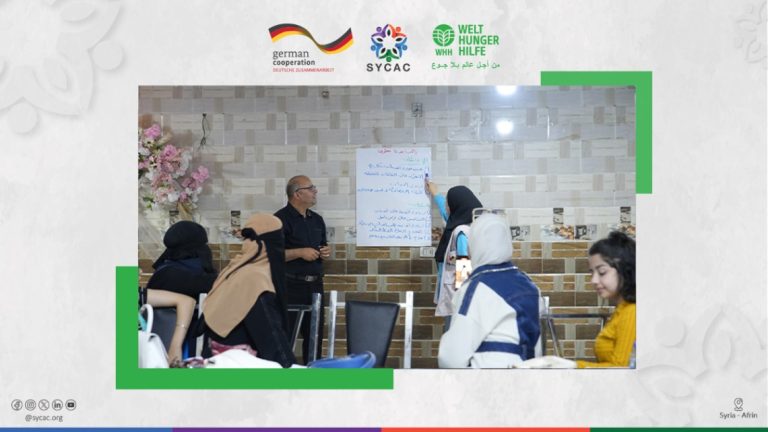
During the workshop, the participants were divided into 4 specialized groups that discussed the most important issues that could be classified within the axes of the economy and early recovery, property rights and civil rights, mental health, and community cohesion, and because the two most important factors affect civil work as a whole and contribute to increasing gaps due to their importance in the roles they play.
The groups focused on integrating the media into each of the issues discussed and on integrating the gender perspective into it. Then each group discussed the mechanism of possible interventions to address these issues and presented its recommendations.
Conclusion:
Despite the efforts made by the organizations and all parties that responded to the earthquake and contributed to meeting the needs of civilians in north-western Syria, the responses took only the humanitarian aspect, and this turns societies into societies dependent on aid on the one hand and unaware of the importance of development on the other hand. Neglecting the signs for imminent and future social aspect could contribute to the increase of conflicts in societies that are already disintegrated and exhausted by long years of war, displacement, and the loss of hope for a close political solution that will achieve their stability and recovery, will exacerbate the problems and issues for a long time and deprive the region of its stability and the provision of sustainable peace.
Without coordination, cooperation, networking, combined efforts, and work on all aspects, we will not be able to reach healthy, stable, and cohesive societies.