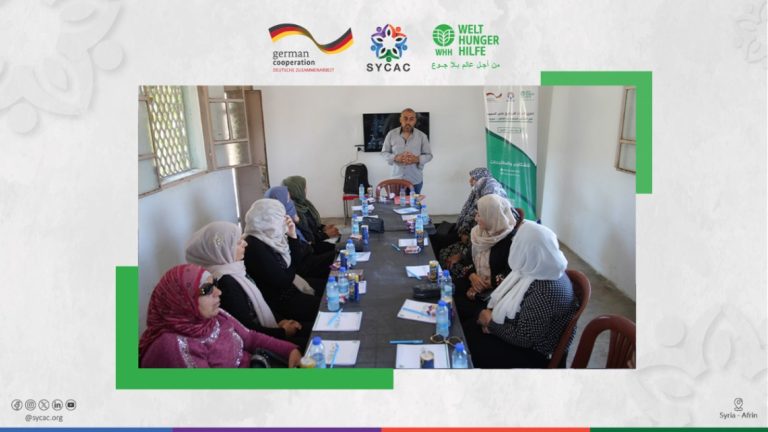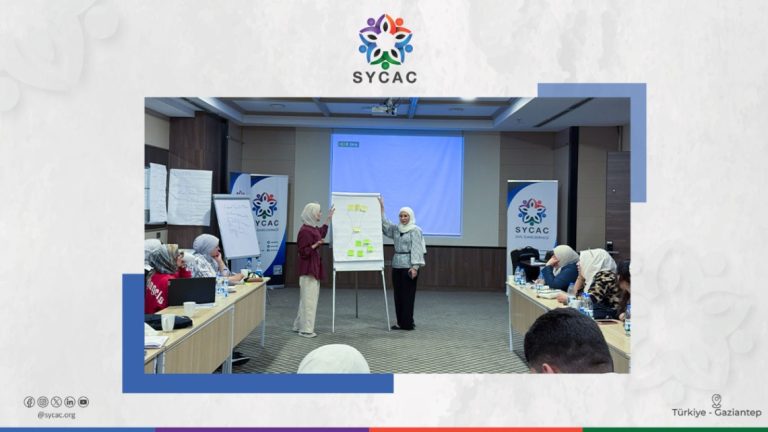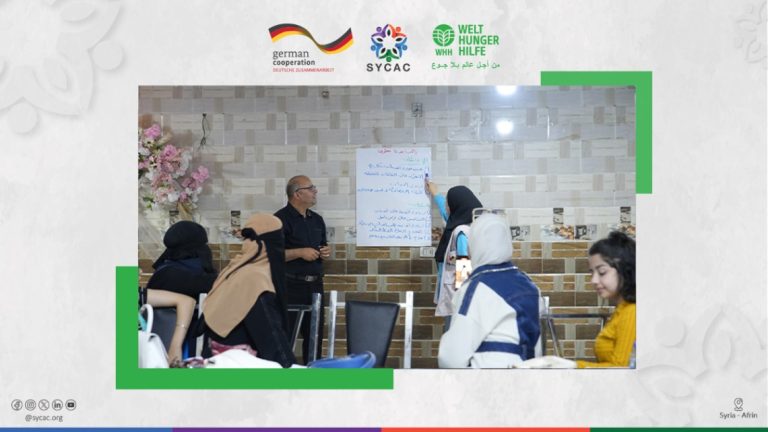
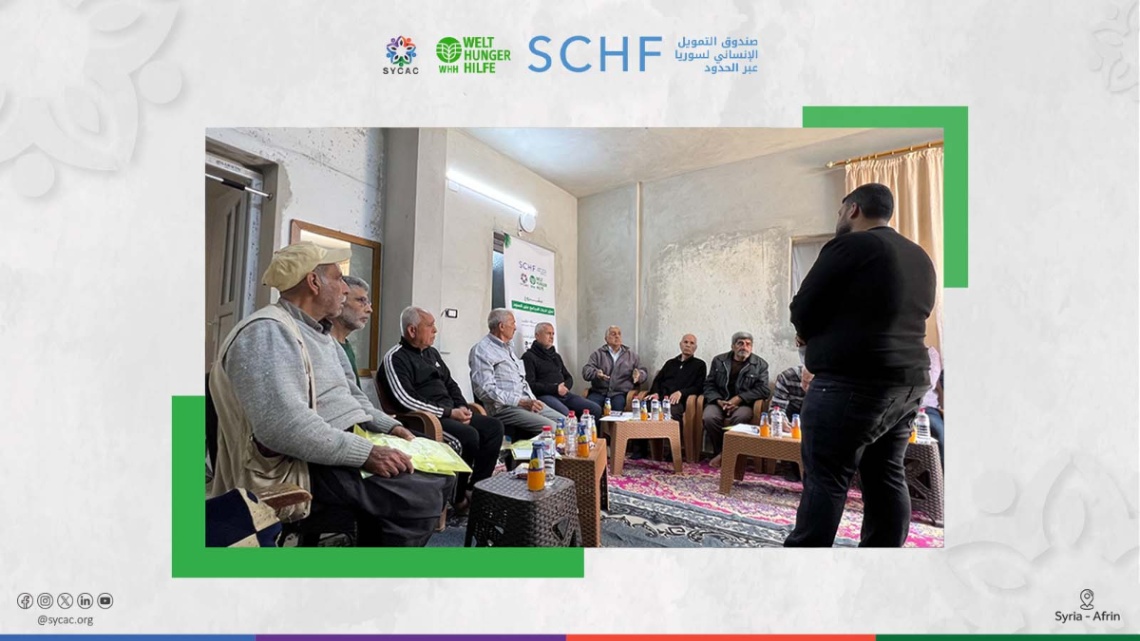
As part of SYCAC’s efforts to promote social cohesion and peacebuilding, eight dialogue sessions were held in the village of Upper Kafardali in rural Afrin. These included three sessions for women, three for men, and two for children.
The sessions brought together men, women, and children from diverse age groups. Adults ranged in age from 18 to 60, while the children’s sessions included two age groups: 9–12 years and 12–17 years.
Participants came from both Arab and Kurdish communities, alongside community leaders and individuals from marginalized groups, adding rich cultural and human dimensions to the discussions.
✨ Highlights of the sessions:
The sessions began with ice-breaker and trust-building activities, followed by an introduction to SYCAC’s project and future plans in the village. Participants then engaged in conflict analysis through small group discussions, where they explored:
- Causes of conflict, such as cultural differences, varying traditions, and poor living conditions.
- Key recurring issues like land and water disputes, uneven service distribution, and social tensions.
- Stages of conflict (escalation, negotiation).
- Affected groups, including children, women, the elderly, and persons with disabilities.
- Main stakeholders, such as the village head, community committees, religious and educational leaders, and NGOs.
- Underlying needs like recognition, safety, and inclusion in decision-making.
- Options for resolution included negotiation, community-led mediation, and service-oriented projects to ease tensions.
🟢 Children’s Activities: Learning and Engagement
- First session (ages 7–12): Children explored emotions and learned to differentiate between conflict-escalating behaviors and peaceful solutions. The session ended with expressive emoji drawings reflecting their feelings.
- Second session (ages 12–17): Children developed negotiation skills through a simulated conflict scenario, concluding with presenting demands and solutions through constructive dialogue.
💬 The sessions concluded with reflection and evaluation, where participants expressed deep satisfaction and eagerness to continue these gatherings that open new paths for dialogue and mutual understanding.
--- This project is funded by SCHF and implemented in partnership with Welthungerhilfe (WHH) ---