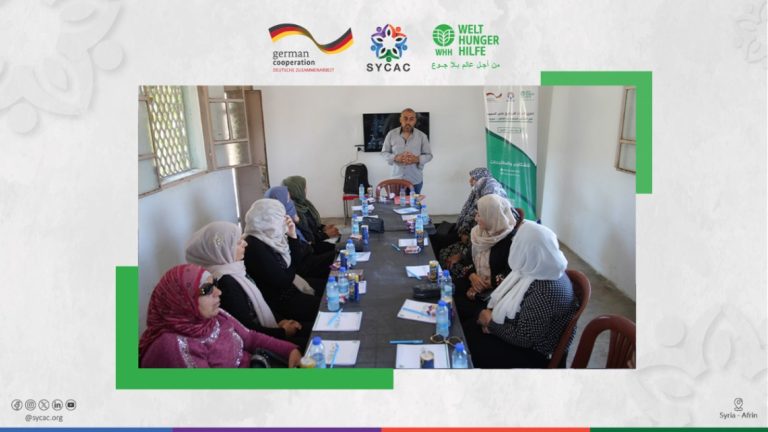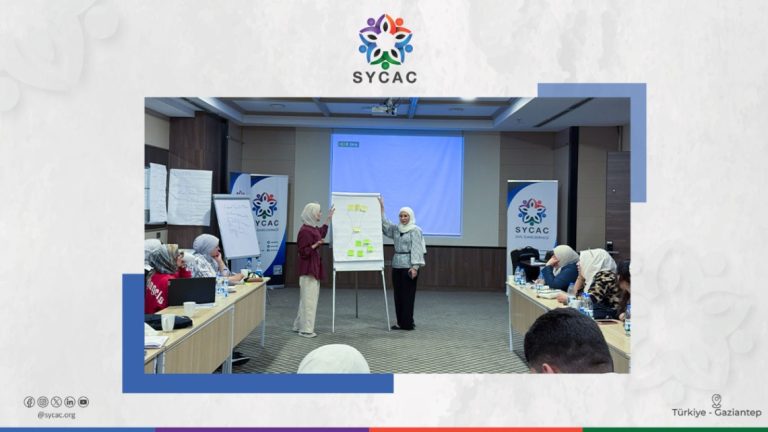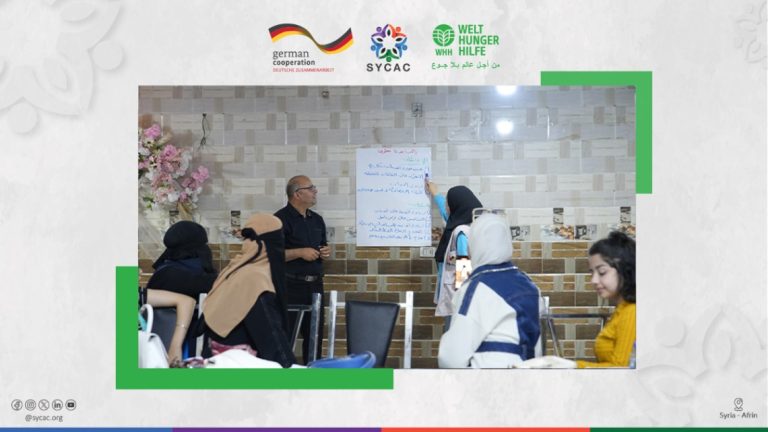
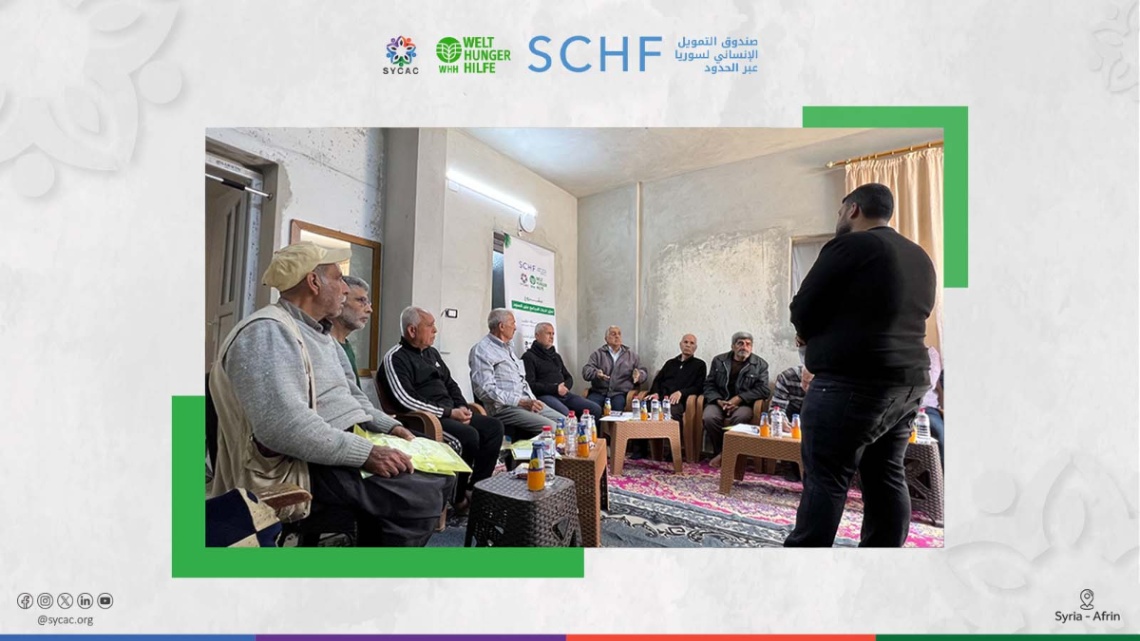
As part of a series of dialogue sessions organized by SYCAC in various areas of rural Afrin, eight dialogue sessions were held in the village of Lower Kafrdali. These included three sessions for women, three for men, and two for children. The sessions brought together participants from diverse age groups and cultural backgrounds to ensure inclusivity and enrich the dialogue.
These sessions were a response to the acute social challenges and existing or potential conflicts facing the village, highlighting the need for a safe space for dialogue and mutual understanding.
Participants included both local residents and internally displaced persons (IDPs) from Arab and Kurdish communities, as well as often-overlooked groups such as persons with disabilities and other marginalized individuals. The sessions were designed to provide a safe and open environment that encourages expression and collective reflection, in a context marked by visible and latent conflicts that require deep-rooted solutions based on dialogue and mutual respect.
✨ The sessions featured the following activities:
- A detailed presentation about the SYCAC project, its phases, and future plans in the village.
- An expressive art activity around the symbolism of peace from the participants’ perspectives.
- Division of participants into small groups to discuss and analyze social conflicts.
- Discussion of sensitive issues such as: the unequal distribution of aid, disputes over irrigation of agricultural land, tensions related to Kurdish identity, and conflicts over confiscated homes.
- Proposals for peaceful solutions that foster a culture of dialogue, with notable consensus on the importance of negotiation and collective engagement to resolve conflicts.
- A final evaluation of the sessions showed participant satisfaction and a strong interest in continuing such constructive meetings.
✨ The children’s sessions were marked by interactive and age-appropriate educational activities:
- In the first session (ages 7–12): Activities were conducted to help children understand emotions, such as “6 or 9” and “Problem or Solution” through short stories, along with expressive drawing using emojis.
- In the second session (ages 12–17): A realistic role-play was held to teach negotiation and persuasion skills, with participants divided into two groups representing opposing sides of a conflict. The session ended with free drawing representing peace.
🎯 Throughout the sessions, rich dialogues reflected the participants’ awareness and helped create a clear map of local conflicts and potential solutions. The sessions strongly emphasized the role of women as peace mediators and children as early ambassadors for a culture of understanding and tolerance.
💬 The sessions concluded with an exchange of reflections and feedback, where all participants expressed their appreciation to the facilitators and fellow participants for the enriching experience.
--- This project is funded by SCHF and implemented in partnership with Welthungerhilfe (WHH) ---